Dolomites in winter: a complete guide (2026)
Some links on Italy Travel Plan are affiliate links. If you make a purchase through them, I may earn a small commission at no extra cost to you. Thanks for your support!
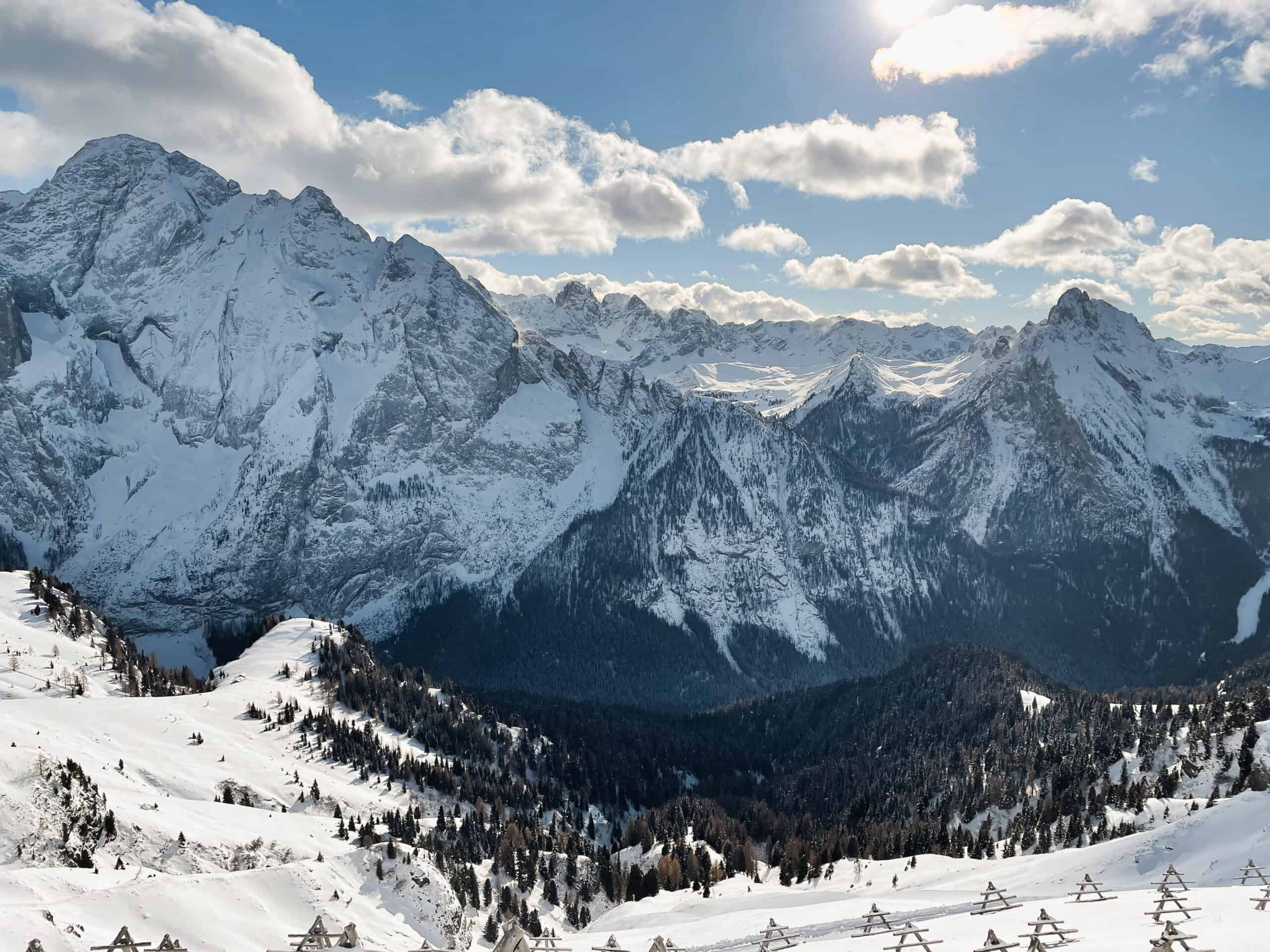
The Dolomites in winter are a mix of snow, silence, and mountain beauty that’s hard to describe until you see it yourself. Ski slopes sparkle under the sun, alpine villages glow with Christmas lights, and hotel spas become the perfect refuge after a day in the cold.
So, if you’re wondering whether it’s worth visiting in winter, my answer is absolutely yes! It’s one of the best times to experience the Dolomites.
I’ve been coming here for years (it’s where I learned to ski!) because it’s one of my favorite places in Italy.
My favorite area this time of year is Val Gardena: the slopes are incredible, but there’s also plenty of things to do if you don’t ski, like relaxing at an alpine spa or visiting Christmas markets. My sister used to live nearby and every year we’d visit them, so cute!
Is it worth visiting the Dolomites in winter?
In general, yes—but it depends on your travel style. Winter in the Dolomites is absolutely beautiful but, like everything in life, it’s not for everyone!
If you love mountain views, cozy hotels, cute alpine towns, winter sports and being surrounded by snow, I’m sure you’ll fall in love with it. It’s really romantic and magical.
To me it’s the perfect mix of relaxation and sports.
It’s not just about skiing though! There’s plenty to do, from visiting Christmas markets and relaxing in spas to enjoying amazing walks (my dog always has the time of his life walking in the snow here).
Some of the Dolomites’ most famous summer spots are just as beautiful in winter, from Alpe di Siusi’s ski slopes to the frozen Lago di Braies and the snow-covered peaks of Seceda and Tre Cime. So you can absolutely tick off some bucket list places too.
✅ Who it’s for:
- Skiers: world-class slopes, including the legendary Sellaronda circuit.
- Families with kids or teens: ski schools, snow play areas, lots of hotels have heated pools (I used to love playing in the pool after a snow day!)
- Couples and groups: skiing, après-ski, boutique shopping, and spa days.
- Non-skiers: Christmas markets, snowshoeing, photography, great food and cozy alpine hotels.
❌ When it might not be for you:
- You dislike cold and snow.
- You want to road trip across multiple regions in a few days (weather and snowy roads make it difficult). You would probably enjoy the Dolomites more in summer or autumn.


Winter events in the Dolomites
Christmas markets
From late November to early January, towns like Bressanone, Ortisei, Selva di Val Gardena, San Candido, and Dobbiaco turn into small Christmas villages. You’ll find wooden stalls, lights, mulled wine, and local crafts!
I also have a soft spot for Rovereto, near Trento. My sister used to live there, and we’d go every year to visit the Christmas markets. I still have the embroidered table runners I bought back then, they come out every Christmas at home!
Christmas markets are one of my favorite places to shop for Christmas gifts. Plenty of souvenirs opportunities there ☺️

Krampus parades
If you’re around in early December, don’t miss the Krampus parades. It’s a centuries-old Alpine tradition where people dress up as very scary creatures that accompany Saint Nicholas. It’s wild!
The events are usually around December 5 and 6. The most famous one is in Dobbiaco, but you can also see them in Bressanone, Merano and Bolzano. They still tend to frighten me as an adult.
Torchlight ski descents
On New Year’s Eve and January 6 (Epiphany), ski instructors and locals ski down the slopes at night carrying torches. It’s beautiful to watch — especially in Selva di Val Gardena, Ortisei, or Cortina d’Ampezzo — and it makes the mountains look absolutely magical!
Ski competitions and events
Winter is also packed with big ski events like the FIS World Cup races in Val Gardena and Alta Badia, and the Marcialonga cross-country race between Moena and Cavalese.
The next Winter Olympics will take place from February 6 to 22, 2026 in various locations in northern Italy: Milan, Cortina d’Ampezzo, Bormio and Livigno, and some more. It’s an exciting time, especially for the Dolomites area!
In Cortina, women’s alpine skiing events will be held on the famous Olympia delle Tofane slope. The biathlon competitions are set for Anterselva (Antholz) in South Tyrol, and the ski jumping and Nordic combined events will happen in Predazzo, in Val di Fiemme.
👉 Need a hand putting your winter trip together? I’ve got you!
I am an italian travel planner, and I spend so much time exploring (and skiing!) in the Dolomites. I can create a full itinerary for you or simply help you refine the details in a one-hour consultation.
Best things to do in the Dolomites in winter
Winter in the Dolomites can be as active or relaxing as you want it. You can spend your mornings skiing and doing winter sports, your afternoons in a spa, and your evenings wandering through snowy villages.
Even if you don’t ski, there’s plenty to enjoy!
Skiing and snowboarding
If you love skiing, the Dolomites are hard to beat, believe me.
The Sellaronda is a legendary ski loop that connects 4 valleys (Val Gardena, Alta Badia, Arabba, and Canazei), it’s a full day of skiing through incredible scenery. I promise, it’s the experience of a lifetime. It’s not overly technical but I wouldn’t recommend it to beginners, I’d say an intermediate level is needed.
Val Gardena is my favorite area in general (180km of slopes and easily connected with other areas) but Alta Badia and Cortina d’Ampezzo are other great options. You can check out my favorite ski resorts in the Dolomites in this dedicated post.

Cross-country skiing
If you prefer something slower, try cross-country skiing. The trails around Dobbiaco and Alpe di Siusi are beautiful, with wide open views and a peaceful atmosphere.
It’s not as thrilling as downhill skiing (which I do prefer), but it’s a nice way to spend a quiet morning in the snow.
Snowshoeing
Snowshoeing is one of the easiest ways to explore the Dolomites in winter if you don’t ski. No ski pass or lessons needed so it’s also much cheaper!
You can walk through forests, meadows, or panoramic trails, and it’s perfect for slowing down and enjoying the silence. Many hotels and local guides offer rentals or guided tours, but you can also go on your own.
This is my go to activity when I’m not skiing. I absolutely love it, it’s so relaxing and you get to enjoy the calmer, quieter side of the dolomites, far away from the crowds.
If you’re looking for a guided experience, here are a few beautiful options I recommend:
- Snowmobile and snowshoeing at Tre Cime di Lavaredo –. one of the most iconic spots in the Dolomites, reached by snowmobile and best done with a guide for safety in winter conditions.
- Snowshoeing at the Tre Cime di Lavaredo – another great guided option in the area if you want to combine adventure and panoramic views
- Snowshoeing at the Cinque Torri – a scenic, quieter route close to Cortina, perfect for first-timers.
All three include the equipment you need and are easy to join even if it’s your first time snowshoeing.
Winter hiking and ski mountaineering
If you love being outdoors, winter hiking or ski mountaineering (skialp) are great ways to explore quieter areas of the Dolomites.
It’s very different from summer hiking — the trails are snow-covered, so you’ll need proper gear or a local guide. Some routes are easy and well-marked, while others lead to remote alpine huts where you can stop for a hot drink or lunch.


Sledding and tobogganing
Sledding isn’t just for kids, it’s a lot of fun, especially if you’re visiting with family or friends!
There are plenty of dedicated runs all across the Dolomites. Some are reachable by lift and others after a short hike, then you can rent a sled directly at the mountain hut before heading down.
A few great spots to try are Alpe di Siusi (Rifugio Molignon and Pista Bullaccia), Val di Funes (Gleiseralm), Val Gardena (Rifugio Resciesa), and Alta Badia, which all have well-prepared runs and beautiful scenery.
For more ideas and updated routes, you can check this nice list of trails too.
Photography spots
If you’re into photography like I am, winter in the Dolomites is essentially a playground 😂
Everywhere you look is photo-worthy, and the soft light makes it easy to slow down and shoot without rushing.
Some of my favorite spots are the Seceda ridgeline, Alpe di Siusi, and Lago di Braies, which freezes into an almost surreal landscape, especially in early or late winter, when cracks start to appear in the ice.
Food experiences
Every trip to Italy means eating great food, and the Dolomites are no exception. You have to try canederli, polenta with mushrooms, and apple strudel. I was obsessed with canederli as a kid — my grandma always made them, and they’re still my comfort food.
Cheese is a big thing here, so if you’re vegetarian, you’ll have plenty of options. If you’re vegan like me, it’s a bit trickier but not impossible. Most huts serve polenta with mushrooms (just ask for no cheese), or you can visit fully vegan places like Paradiso Pure.Living in Alpe di Siusi or La Vimea in Val Venosta.
Spas and wellness
After a cold day outside, there’s nothing better than warming up in a spa. My boyfriend loves a spa moment, especially in winter, so we’ve visited our fair share across the country.
There’s something extra relaxing about sitting in hot water while looking at the mountains covered in snow. Super peaceful.

So many hotels in the Dolomites have wellness areas with heated pools, saunas, or steam rooms, and it’s the perfect way to end a ski day or a long walk in the snow.
But if yours doesn’t or you want to dedicate an entire day to relaxation, you could treat yourself to QC Terme Dolomiti in Val di Fassa. The place is absolutely incredible, surrounded by mountains with outdoor pools, salt rooms, and waterfalls… 100% recommended!
👉 You can get your QC Terme tickets here!
This is the most beautiful spa in the Dolomites. If you want to relax for a day, this is the place to go.
Winter weather in the Dolomites
Long story short: it’s cold and snowy.
Expect plenty of snow and crisp mountain air. In places like Selva di Val Gardena, the average winter temperatures range from –9°C (16°F) to 6°C (43°F) in winter.
A few years ago, I skied the Sellaronda loop, and even though it was unforgettable, the temperature dropped to –13°C (8.6°F) at midday, so the right clothes are absolutely essential! I had to buy some extra warmers for my hands and feet because I was literally freezing 🥶
Make sure to bring thermal layers, waterproof shoes and jacket, gloves and hand warmers!
You’ll find snow from mid-December to early April, and most ski areas have snowmaking, so conditions are usually reliable all season. January is usually the coldest month, February is ideal for skiing since days are slightly longer and the snow condition on the slopes is great.

Practical tips for visiting in winter
Getting around
The easiest way to travel around the Dolomites in winter is by car. Public transport could work, but it’s slower and less frequent in the mountains.
Always carry snow chains (mandatory from November 15 to April 15) and check the weather before driving.
Where to stay
If you’re skiing, try to stay close to the slopes. It’s more expensive but it saves so much time every morning, which ultimately results in more time with fewer people on the slopes.
Selva di Val Gardena and Cortina d’Ampezzo, are bigger towns that are also close to the slopes so you’ll have restaurants, shops, and spas within walking distance. You can read all about my favorite ski resorts in the Dolomites here.
When to go
Winter is high season, especially around Christmas, New Year’s, and February. Prices go up fast, so book as early as you can, skipass included.
What to pack
Warm thermal layers, waterproof boots, and gloves and hats are a must. I always bring thermal leggings and hand warmers too because they make cold days so much easier.
Travel pace
Winter isn’t the time to rush through the Dolomites. Between snow, winding roads, and shorter days, it’s better to slow down and focus on one area instead of trying to see it all. Slow travel is your friend here!
Choose a base you love and explore from there. It’s the kind of place and time where doing less actually helps you experience more.
How to get there
The main airports are Venice, Verona, Innsbruck, and Milan, all within a few hours’ drive. Trains run to cities like Bolzano and Trento, but in winter you’ll need a car to reach most mountain towns. I don’t recommend relying on buses this time of year.
If you need to rent a car, you can check the best prices on Rentalcars.
For detailed routes, travel times and additional tips, check my full guide on how to get to the Dolomites.

FAQs about visiting the Dolomites in winter
Is visiting the Dolomites in winter worth it?
Yes, visiting the Dolomites in winter is absolutely worth it if you enjoy snow, mountain views, and a slower travel pace. The scenery is incredible, the skiing is world-class, and even non-skiers can enjoy Christmas markets, spas, and cozy alpine villages. It’s cold but unforgettable.
Can you see Seceda in winter?
Yes, you can visit Seceda in winter, but only by cable car from Ortisei, since the hiking trails are closed due to snow. The viewpoint at the top stays open, and on clear days, you’ll get some of the most dramatic views in the Dolomites. You can also ski in the area.
How to get to the Dolomites in winter?
The easiest way to reach the Dolomites in winter is by car. The main airports are Venice, Verona, Innsbruck, and Milan, all within a few hours’ drive. Trains reach Bolzano or Trento, but you’ll need a car to get to most ski resorts and small mountain towns.
Are the Dolomites good for non-skiers?
Yes, the Dolomites are great for non-skiers too. You can go snowshoeing, visit Christmas markets, relax in spa hotels, or take cable cars for incredible views. Towns like Ortisei, Selva di Val Gardena, and Cortina d’Ampezzo offer plenty to do without setting foot on a slope.
Is it safe to drive in the Dolomites in winter?
Yes, driving in the Dolomites in winter is safe if you’re prepared. Roads are well maintained, but snow tires or chains are mandatory from November to April. Always check the forecast and avoid driving during heavy snowfall if possible.
When does it usually snow in the Dolomites?
Snow in the Dolomites usually starts in late November and lasts until early April. The most reliable snow conditions are from mid-December to early March, which is also the main ski season. January and February are the coldest and snowiest months, with perfect conditions for winter sports.

Plan your Dolomites winter trip
If the Dolomites are already calling your name, it’s time to start planning your trip. You’ll find plenty of ideas to help you get started — from where to stay in the Dolomites and how to get there to things to do once you arrive.
And if you’d rather skip the research, I can help you plan it all. You can request a custom travel itinerary or book a 1:1 consultation where we’ll build your Dolomites trip together — from finding the right base to picking the best winter activities for your style.
Last but not least, if you’re planning a trip for the Milano-Cortina 2026 Winter Olympics, don’t miss my full guide to the Winter Olympics in Italy, with all the details about events, venues, and where to stay.
Read more about the Dolomites here:
- Milan–Cortina 2026 Winter Olympics guide: destinations, venues, and how to plan your trip
- Where to stay for the Milan–Cortina 2026 Olympics (from a local!)
- Best ski resorts in the Dolomites
- 7 Unmissable things to do in the Dolomites for first timers
- Where to stay in the Dolomites: best Winter & Summer options
Need help planning your Italy trip? 🇮🇹
I offer custom itineraries designed around your travel style, starting with a 1:1 call where we’ll go over the places you want to visit, your interests, and any questions you have. Then, I’ll create a detailed itinerary just for you!
If you just need quick advice, you can also book a call on its own for itinerary feedback and travel tips from a local.
Let’s plan together